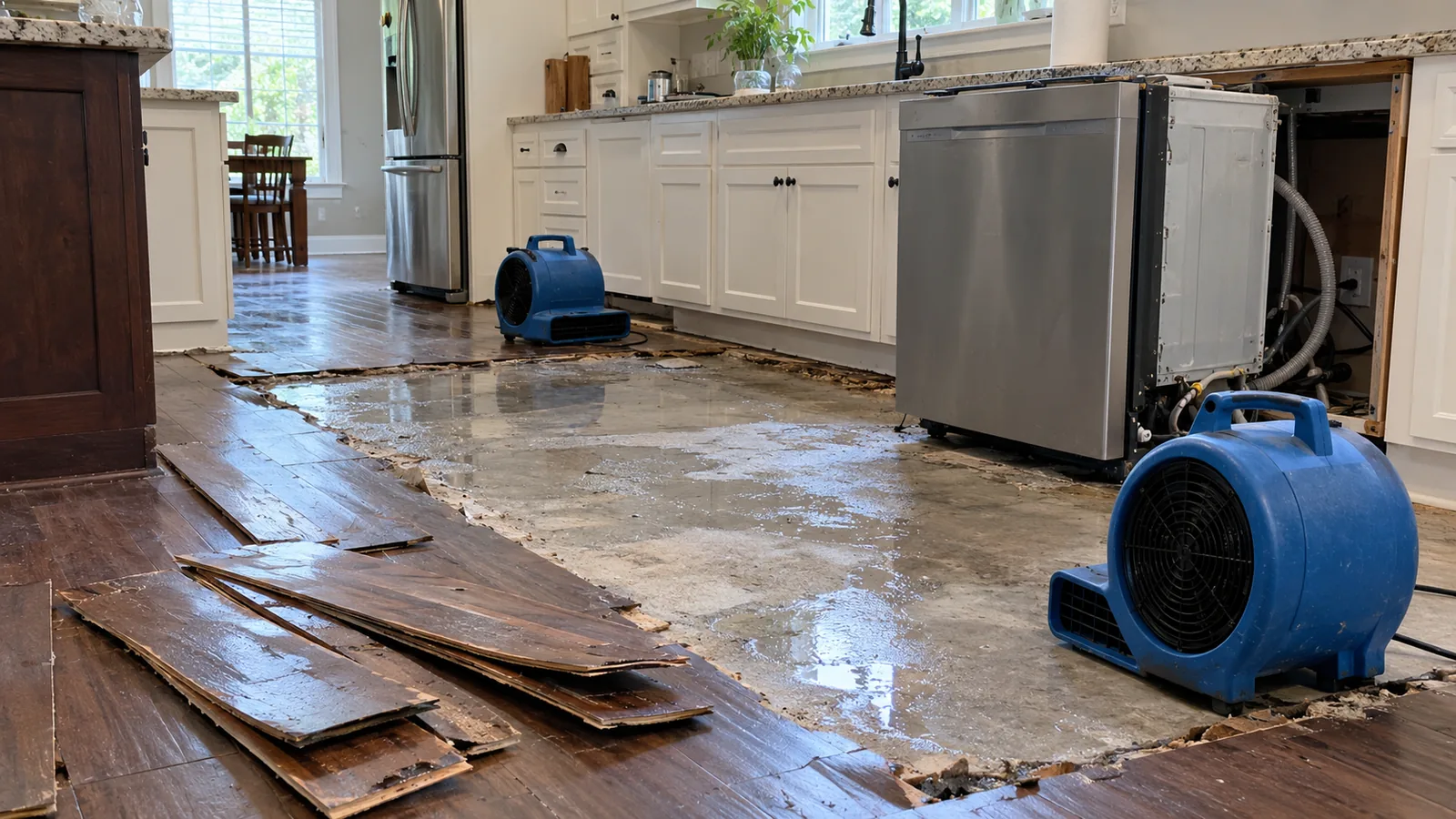
Slab and humidity check
Water that sits on a slab soaks into it. Before new vinyl, laminate or wood goes down, the slab should dry and then be tested for moisture against the new product's limits. Laying new flooring over a wet slab traps the water.
First, Stop the Water and Dry It
Fix the source, then get air moving. Wet carpet pad, swollen laminate and soaked engineered wood rarely come back, and leaving them in place feeds mold. Take photos before anything is removed if you plan an insurance claim.
Around Jacksonville, river flooding is a real risk near the St. Johns. Hurricane Irma pushed water into riverfront neighborhoods in 2017. Everyday leaks still cause most ruined floors.
What Usually Can and Can't Be Saved
- Tile: usually survives water. Grout and the slab under it may need attention.
- Vinyl plank: the planks shrug off water, but water under them needs to dry. They can sometimes be lifted, dried and relaid.
- Laminate and engineered wood: often swell at the edges and need replacing.
- Solid hardwood: may cup, then flatten as it dries. Some floors can be sanded flat later; badly cupped boards get replaced.
- Carpet and pad: pad almost always goes. Carpet depends on how clean the water was.
The Subfloor Check
Once the old floor is up, the contractor should check for soft wood, mold and staining on raised floors, and for cracks and moisture on slabs. Hidden damage is common after a leak that ran for a while.
Ask how that will be priced if they find it. Read subfloor repair for what a proper fix involves.
Choosing a Floor for Next Time
If the room is a kitchen, laundry or bath, a waterproof floor is worth it. Rigid core vinyl plank, newer waterproof laminate and porcelain tile all held up in long soak tests where engineered wood swelled.
See luxury vinyl plank flooring installation and tile flooring installation.
Matching the Rest of the House
Patching one room to match the rest is harder than it sounds. The old product may be discontinued, and new boards rarely match faded ones. Sometimes replacing a whole connected area costs a little more but looks far better.
Ask the contractor to show you where the new floor will stop and what the transition will look like.
Insurance and Paperwork
Every policy is different, so ask your insurer what they cover before work starts. A detailed written estimate that lists removal, drying checks, subfloor work and the new floor helps with any claim.
Our guide on what a flooring contract should include lists the items to look for.
Need a floor replaced after water? Send the estimate form or call (904) 555-0186.