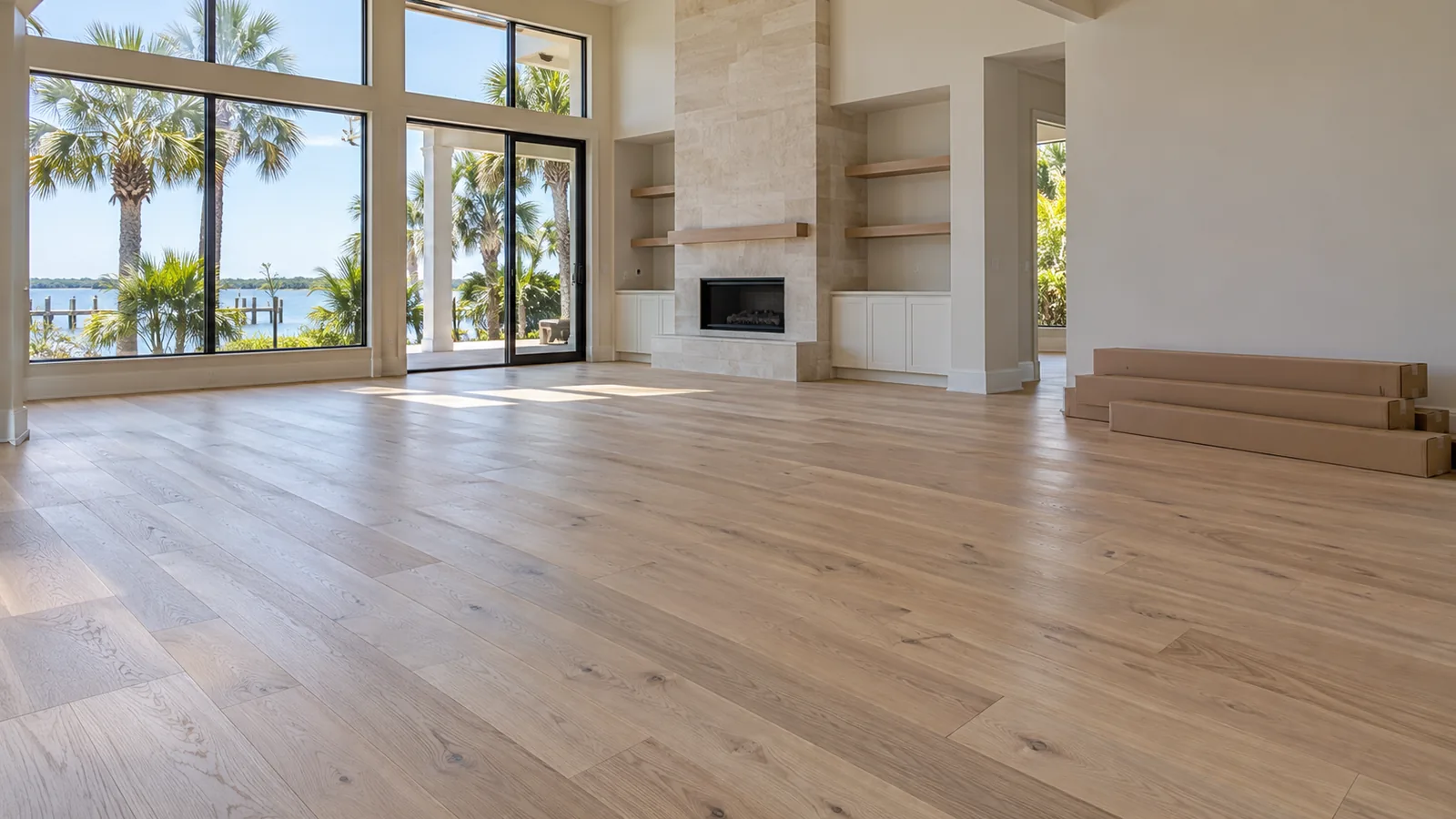
Slab and humidity check
Over a slab, engineered wood is usually glued down or floated over a moisture barrier, depending on the product. The slab should be tested for moisture first and the result compared with the product's limits.
The Wear Layer Decides How Long It Lasts
The wear layer is the real wood on top, the part that can be sanded during a refinish. A good engineered floor from a solid mill carries about six millimeters, close to what solid wood offers above the tongue.
With that much wood, it can be refinished several times and last as long as solid. Under about four millimeters, it is a floor you replace rather than refinish. Under two, it can't really be sanded at all.
Why It Handles Humidity Better
The plywood core is cross layered, so it fights the swelling and shrinking that wide solid boards go through. You see fewer seasonal gaps and less cupping. Engineered comes in widths from about three inches to well past ten.
It is stable, not waterproof. Long exposure to water still ruins it.
Where Not to Put It
Skip it in a bathroom with a tub or shower. In soak tests it swelled at the edges while vinyl plank and newer waterproof laminate didn't. A kitchen is fine if spills get wiped up.
It also scratches and dents more easily than vinyl plank under dog claws, grit and heels. Near the beach, that means mats at every door and a broom close by.
What Good Installation Looks Like
- A flat, clean, dry slab or subfloor, checked with a long level.
- The right method for that product: glue down, nail down or floating. The install guide decides, not habit.
- Boards pulled from several boxes so color varies naturally across the room.
- Jambs undercut so the boards slide under them cleanly.
- Expansion space at the walls, hidden under trim.
Sample Boards Can Fool You
A single sample board shows one slice of the color range. Laid across a whole room, engineered wood often reads lighter or more varied than the sample suggested.
Ask to see a larger spread of boards, or a finished floor in the same product, before you order. Changing your mind after delivery is possible, but it slows the job and can add cost.
Price Versus Solid Wood
Here's what surprises people: engineered wood of the same quality usually costs about a fifth more than solid, even though it uses less hardwood. It's more work to make. You're paying for stability, not saving money.
For narrow boards, solid is often the better buy. Compare hardwood flooring installation, and see our notes on the best flooring for Florida humidity and flooring over a concrete slab.
Ask for a measured engineered wood quote through the estimate form or at (904) 555-0186.